




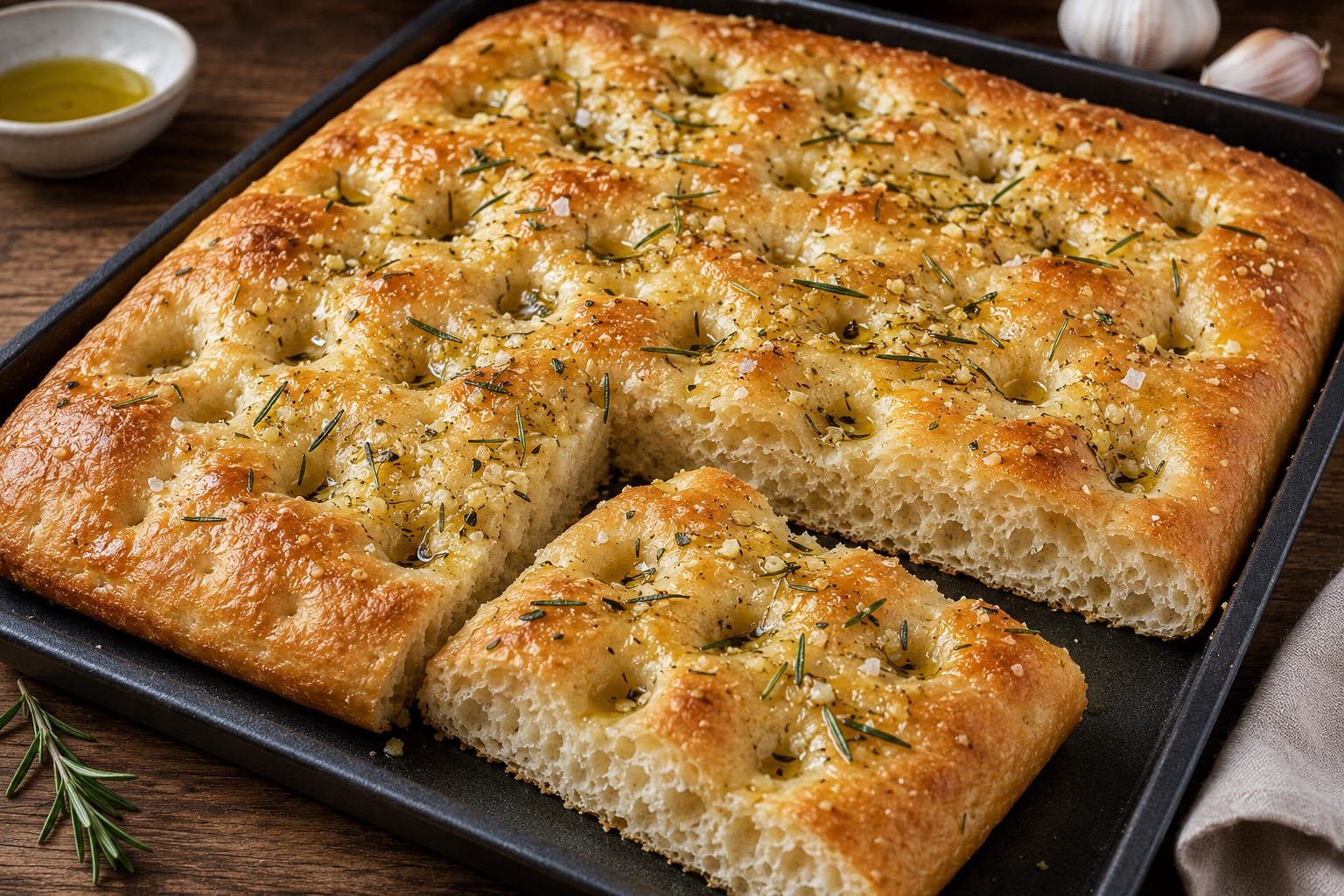
There is something special about homemade sourdough focaccia. The outside becomes beautifully golden and lightly crisp, while the inside stays soft, airy and chewy. Add fresh garlic, herbs, olive oil and a little flaky salt, and you have a simple bread that feels special enough for guests but is still easy enough to make at home.
This Garlic & Herb Sourdough Focaccia is a wonderful recipe for anyone who enjoys sourdough baking. It uses an active sourdough starter instead of commercial yeast, so the dough needs time to ferment and develop its flavor. The longer fermentation gives the focaccia a deliciously deep sourdough taste and a light, open texture.
Ingredients
For the dough
100g active sourdough starter
400g bread flour
300g lukewarm water
8g fine sea salt
25g extra-virgin olive oil
For the topping
2–3 garlic cloves, finely minced
1 teaspoon dried rosemary
1 teaspoon dried oregano
2–3 tablespoons extra-virgin olive oil
Flaky sea salt, to taste
A little fresh rosemary, optional
Preparing the Dough
Begin by making sure your sourdough starter is active and bubbly. A healthy starter should look lively and have risen noticeably after feeding. This is important because the starter is responsible for fermenting and leavening the dough.
Add the lukewarm water and active sourdough starter to a large mixing bowl. Stir gently until the starter has dispersed throughout the water.
Add the bread flour and mix with a wooden spoon or your hands until no large dry patches remain. At this stage, the dough will look rough and sticky, which is completely normal.
Cover the bowl and allow the dough to rest for around 30 minutes. This resting period gives the flour time to absorb the water and makes the dough easier to handle.
After the rest, add the salt and olive oil. Work them into the dough gently until everything is evenly incorporated.
Stretch and Fold
Instead of aggressively kneading the dough, use the stretch-and-fold method.
With slightly wet hands, grab one side of the dough, gently stretch it upward and fold it toward the center. Turn the bowl and repeat on the other sides.
Do this several times, then cover the bowl again.
Repeat a set of stretch-and-folds approximately every 30 minutes for the first 2 hours. As you continue, you should notice that the dough becomes smoother, stronger and more elastic.
Try not to add lots of extra flour. Focaccia dough is naturally wet and sticky, and the high hydration helps create that beautiful airy texture.
Bulk Fermentation
After the stretch-and-fold stage, cover the bowl and allow the dough to continue fermenting at room temperature.
The exact fermentation time will depend on the temperature of your kitchen and the strength of your starter. Rather than relying only on the clock, look at the dough.
You want it to become noticeably puffier, lighter and filled with small bubbles. It does not necessarily need to double in size.
If your kitchen is cool, fermentation may take longer. If your kitchen is warm, the dough may ferment more quickly.
Patience is one of the most important ingredients when making sourdough.
Preparing the Pan
Once the dough has fermented, choose a generously sized baking pan. A metal or glass rectangular pan works well.
Pour a good layer of olive oil into the pan and spread it across the bottom.
Using lightly oiled hands, gently transfer the dough into the pan. Be careful not to completely knock out all the air that has developed during fermentation.
Let the dough relax in the pan for around 20–30 minutes, then gently stretch it toward the edges.
If it keeps shrinking back, leave it for another 15–20 minutes and try again. The dough will become easier to stretch as it relaxes.
The Final Rise
Cover the pan loosely and allow the dough to rise again.
Depending on your room temperature and starter activity, this may take approximately 1–2 hours.
When ready, the dough should look soft, puffy and airy. You may see bubbles underneath the surface.
Now comes the fun part.
Drizzle the top generously with olive oil. Dip your fingertips into the dough and gently press straight down to create deep dimples across the entire surface.
Do not be afraid to make proper dimples. Those little pockets are one of the things that make focaccia so beautiful.
Garlic & Herb Topping
Scatter the finely minced garlic over the dough.
Sprinkle with rosemary and oregano, then drizzle with another little splash of olive oil.
Finish with a generous pinch of flaky sea salt.
If you enjoy a stronger garlic flavor, you can add a little extra garlic. For a milder flavor, use less.
Fresh rosemary can also be added if you have it available.
Baking
Preheat your oven to 220°C / 425°F.
Place the focaccia into the fully preheated oven and bake for approximately 22–28 minutes, or until the top is deeply golden and the edges are beautifully crisp.
Keep an eye on it during the final few minutes because ovens vary.
The focaccia should have a golden-brown surface, crispy edges and a soft center.
For an especially delicious finish, brush the hot focaccia with a tiny amount of extra virgin olive oil immediately after removing it from the oven.
Cooling and Serving
Allow the focaccia to cool in the pan for several minutes before transferring it to a board.
Try to resist cutting it immediately. Giving it a little time to settle helps the interior maintain its lovely texture.
Once slightly cooled, cut it into squares or rectangles and serve warm.
The crispy edges, soft sourdough center, fragrant garlic and rosemary make this bread incredibly difficult to resist.
Helpful Sourdough Tips
Use an active starter: A bubbly, recently fed starter gives you the best chance of getting a light and airy focaccia.
Don’t rush fermentation: Sourdough depends on time. If the dough hasn’t become puffy yet, give it more time.
Keep your hands oiled or wet: The dough is supposed to be sticky. Adding lots of flour can make the focaccia heavier.
Don’t press out all the bubbles: Handle the dough gently, especially when transferring it to the pan.
Use plenty of olive oil: Olive oil contributes to the flavor, crispy edges and classic focaccia texture.
Watch the oven: A beautifully golden top is ideal, but you don’t want the garlic to become overly dark or bitter.
Final Thoughts
This Rustic Garlic & Herb Sourdough Focaccia is a great way to use your sourdough starter for something different from a traditional loaf. It requires a little patience, but most of the work is simply waiting while the dough ferments and develops its flavor.
Serve it alongside soup, salad, pasta or roasted vegetables, or simply tear off a warm piece and dip it into good olive oil.
The combination of golden crispy edges, soft airy crumb, garlic, herbs and olive oil makes this focaccia a recipe worth making again and again.
Would you serve this sourdough focaccia with dinner or enjoy it warm straight from the oven?
